
๐Ÿ“ Whitefield, Bengaluru
HOD & Senior Consultant ยท Surgical Oncology
Consultation by Appointment
Home/Patient Resources/Understanding Your Diagnosis
CancerWise leaf mark
CancerWise
Understand

Understanding cancer and your diagnosis.

Understanding cancer means knowing what it is, how it is detected and how it is treated. Cancer is a group of more than 100 diseases in which cells grow uncontrolled, and outcomes are often better when it is found early. This guide covers the types of cancer, early warning signs and symptoms, causes and risk factors, screening, treatment options and prevention โ€” and explains the words you will see in your own reports.
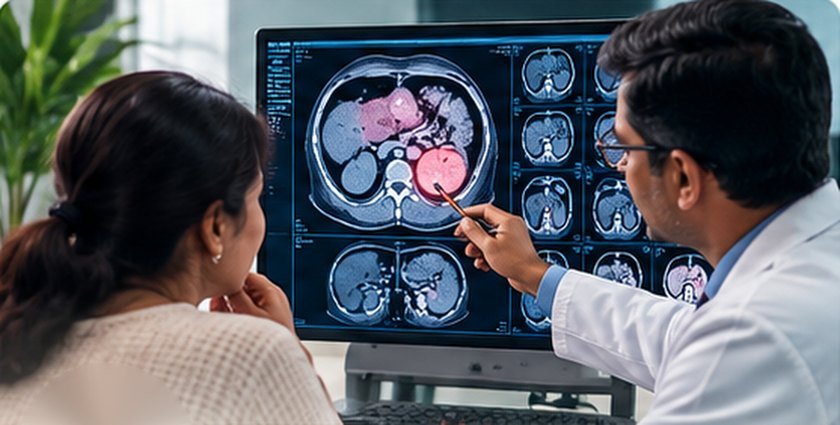
Doctor explaining a CT scan to a patient

Stages of Cancer: Stage I to IV

A general guide to what each stage usually means

Stage I
  • Small tumor
  • Usually confined to where it started
  • Often the most treatable stage
Stage II
  • Larger tumor, or growing deeper into the organ
  • Usually still limited to the area where it began
  • A nearby lymph node may be involved, depending on the cancer type
Stage III
  • Spread to nearby lymph nodes or neighboring tissues
  • Called regional spread
  • Treatment often combines surgery with other therapy
Stage IV
  • Spread to distant organs (metastatic)
  • Treatment often aims to control the disease and relieve symptoms
  • Some patients may still be suitable for surgery or other targeted treatment

Staging rules differ by cancer type. Your pathology and scan reports use the TNM system (tumor size, lymph nodes, metastasis) to give your exact stage, and treatment depends on much more than stage alone.

See all visual guides โ†’

The basics

What is cancer?

Cancer is a group of diseases characterised by uncontrolled cell growth that can invade nearby tissue and spread to other parts of the body.
Normally, cells divide, age and die in an orderly cycle. Genetic changes (mutations) can disrupt this cycle, allowing abnormal cells to keep multiplying.

How does cancer develop?

Cancer usually develops gradually rather than all at once. The steps below show the typical sequence, from a single damaged cell to spread in the body.
  1. DNA in a healthy cell is damaged or mutated.
  2. The damaged cell escapes normal controls and divides repeatedly.
  3. The abnormal cells build up and form a mass called a tumour.
  4. In some cases, malignant cells invade nearby tissue and travel through blood or lymph to other organs (metastasis).

Benign vs. malignant tumours

Not every tumour is cancer. The table compares the general differences between benign and malignant tumours.
Feature
Benign tumour
Malignant tumour (cancer)
Spreads to other parts of the body
Generally does not
Can spread through metastasis
Growth
Usually slower and contained
Often faster and invasive
Comes back after removal
Uncommon
Can recur
Your diagnosis

What your diagnosis means.

A cancer diagnosis comes with many new words. These are the ideas that most reports and consultations are built on.

Cancer type

Cancer is named after the organ and the type of cell where it starts. Adenocarcinoma begins in glandular cells, squamous cell carcinoma in lining cells, and sarcoma in connective tissue such as muscle or fat. The type guides which tests and treatments are relevant.

Primary tumour and spread

The primary tumour is where the cancer started. If cancer cells reach lymph nodes or other organs, those deposits are called secondaries or metastases. A cancer that has spread is still named after where it began.

Grade

Grade describes how abnormal the cells look under the microscope. Low-grade (well-differentiated) cells look closer to normal and tend to grow more slowly. High-grade (poorly differentiated) cells tend to grow faster.
Types

Types of cancer

Among the most common types of cancer worldwide are breast, lung, colorectal, prostate and skin cancer. Cancers are named for the organ or cell type where they begin.
The table below summarises where each common cancer starts, its main risk factors and the screening usually used.
Type of cancer
Where it starts
Key risk factors
Common screening
Breast cancer
Breast tissue
Age, family history, BRCA gene changes
Mammogram
Lung cancer
Lungs
Smoking, air pollution, radon
Low-dose CT (high-risk adults)
Colorectal cancer
Colon or rectum
Age, diet, inactivity, polyps
Colonoscopy, stool tests
Prostate cancer
Prostate gland
Age, family history
PSA blood test (after discussion with a doctor)
Skin cancer
Skin cells
UV sun exposure, fair skin
Skin exam
Cervical cancer
Cervix
HPV infection
Pap and HPV tests

Main categories of cancer

Doctors also group cancers by the kind of cell they begin in. The five main categories are listed below.
  • Carcinoma: begins in skin or the lining of organs; the most common category.
  • Sarcoma: begins in bone, muscle, fat or connective tissue.
  • Leukaemia: cancer of blood-forming tissue such as bone marrow.
  • Lymphoma: cancer of the lymphatic (immune) system.
  • Brain and spinal cord tumours: cancers of the central nervous system.
Risk factors

Causes and risk factors of cancer

Cancer develops when DNA damage builds up in cells, which can be inherited or acquired through lifestyle, infections, environmental exposure and ageing.
A risk factor raises the chance of cancer but does not guarantee it, and some people with cancer have no clear risk factor.

Modifiable risk factors

Some risks can be reduced through choices and medical care. The most widely recognised modifiable risk factors are:

  • Tobacco use
  • Excess alcohol
  • Obesity and physical inactivity
  • Unhealthy diet
  • Excess UV radiation
  • Infections such as HPV, hepatitis B and C

Non-modifiable risk factors

Other risks cannot be changed, but knowing them helps you and your doctor decide on screening. These include:

  • Increasing age
  • Family history of cancer
  • Inherited gene mutations (BRCA1, BRCA2)
  • Prior radiation or cancer treatment
Symptoms

Early warning signs and symptoms of cancer

Common early warning signs of cancer include unexplained weight loss, persistent fatigue, a new lump and unusual bleeding. Symptoms vary by cancer type, and many have non-cancer causes.
The signs below are the ones most often reported. Having one does not mean you have cancer, but it is worth getting checked if it is new or persistent.
  • Unexplained weight loss
  • Persistent fatigue
  • A new lump or thickening
  • A sore that does not heal
  • Changes in a mole
  • Persistent cough or hoarseness
  • Changes in bowel or bladder habits
  • Unusual bleeding or discharge

When to see a doctor

Consider seeing a doctor if a symptom is new, unexplained, or lasts longer than about two to three weeks, and seek urgent care for severe symptoms such as heavy bleeding or difficulty breathing.
Screening & diagnosis

Cancer screening and diagnosis

Cancer screening tests look for cancer before symptoms appear, when treatment is often more effective; in most cases, diagnosis is confirmed by biopsy.

Common cancer screening tests

Recommended tests depend on age, sex and personal risk, so confirm the right schedule with your doctor. Typical examples are shown below.
Screening test
Detects
Mammogram
Breast cancer
Colonoscopy
Colorectal cancer and precancerous polyps
Pap smear and HPV test
Cervical cancer
Low-dose CT scan
Lung cancer in eligible high-risk adults
PSA blood test
Prostate cancer

How is cancer diagnosed?

If cancer is suspected, doctors usually follow a step-by-step process to confirm it. The sequence below is typical.
  1. Medical history and physical examination.
  2. Blood tests and imaging (X-ray, ultrasound, CT, MRI or PET scan).
  3. Biopsy: a tissue sample is examined under a microscope.
  4. Staging: doctors determine how large the cancer is and whether it has spread.

Stages of cancer

Staging systems differ by cancer type, but the general pattern is summarised in this table.
Stage
What it means
Stage 0
Abnormal cells present but not spread (carcinoma in situ)
Stage 1
Small cancer confined to where it started
Stage 2 and 3
Larger cancer and/or spread to nearby tissue or lymph nodes
Stage 4
Cancer has spread to distant organs (metastatic)
Staging

How cancer staging works.

Staging describes how large the cancer is and how far it has spread. It is one of the most important factors in planning treatment. Most solid cancers are staged with the TNM system.
T

T: Tumour

The size of the main tumour and how deeply it has grown into the organ wall or surrounding tissue.
N

N: Nodes

Whether cancer cells are found in nearby lymph nodes, and how many nodes are involved.
M

M: Metastasis

Whether the cancer has spread to distant organs such as the liver, lungs, bones or the lining of the abdomen (peritoneum).
0โ€“IV

Stage groups

T, N and M are combined into an overall stage, usually 0 to IV. Clinical stage is based on examination and scans; pathological stage is confirmed after the tumour and lymph nodes are examined following surgery.
Scans & tests

Understanding your scans.

Different tests answer different questions. Not every patient needs every test; your team will choose what is relevant to your cancer.

CT scan

Detailed cross-sectional X-ray images. Commonly used to assess the tumour and to check the chest, abdomen and pelvis for spread.

MRI

Uses magnetic fields rather than X-rays. Particularly useful for soft tissues such as the rectum, pelvis, liver and breast, and for planning precise surgery.

PET-CT

Shows how active tissues are, which can help detect spread. It is useful in selected cancers and situations, not routinely for everyone.

Endoscopy and biopsy

Camera tests let the doctor see inside and take tissue samples. A biopsy examined under the microscope is what confirms cancer.

Tumour markers

Blood tests such as CEA, CA 19-9 or CA-125. They help monitor some cancers over time but cannot diagnose cancer on their own.

Staging laparoscopy

A short keyhole procedure sometimes used to look for small deposits in the abdomen that scans can miss, before major surgery is planned.
Pathology report

Reading your pathology report.

The pathology report describes what was found when the tissue was examined. After surgery it becomes one of the most important documents for deciding next steps.

Histology and grade

The exact cancer type and how aggressive the cells look. This confirms the diagnosis and helps predict behaviour.

Margins

The pathologist checks the edges of the removed tissue. A clear (negative, R0) margin means no cancer cells were seen at the cut edge.

Lymph nodes

Reported as the number of nodes containing cancer out of the total examined, for example 2/18. This affects stage and whether further treatment is advised.

Lymphovascular and perineural invasion

Whether cancer cells were seen inside small vessels or around nerves. These findings can influence decisions about additional treatment.

Biomarkers and receptors

Tests such as ER, PR and HER2 in breast cancer, or MMR/MSI in bowel cancer. They help decide whether hormonal, targeted or immunotherapy may be useful.

Response to treatment

If you had chemotherapy or radiotherapy before surgery, the report may describe how much of the tumour responded (tumour regression).
Treatment

Cancer treatment options: surgery, chemotherapy, radiation and more

Cancer treatment options include surgery, chemotherapy, radiation therapy, immunotherapy, targeted therapy and hormone therapy, often combined and chosen by the cancer type, stage and the personโ€™s health.
Each treatment works differently, and your team may recommend one or several. The table explains the main options.
Treatment
How it works
Surgery
Removes the tumour and some surrounding tissue.
Chemotherapy
Uses drugs to kill or slow cancer cells throughout the body.
Radiation therapy
Uses high-energy beams to destroy cancer cells in a targeted area.
Immunotherapy
Helps the immune system recognise and attack cancer.
Targeted therapy
Attacks specific genetic features of cancer cells.
Hormone therapy
Blocks hormones that fuel some breast and prostate cancers.
Palliative care
Relieves symptoms and improves quality of life at any stage.
Treatment terms

Common treatment terms.

Multidisciplinary tumour board

Surgeons, medical and radiation oncologists, radiologists and pathologists review your case together to agree on the best plan.

Neoadjuvant therapy

Chemotherapy, radiotherapy or other treatment given before surgery, to shrink the tumour or treat early spread.

Adjuvant therapy

Treatment given after surgery to lower the risk of the cancer coming back.

Curative and palliative intent

Curative treatment aims to remove or control the cancer completely. Palliative treatment aims to control symptoms and improve quality of life.

Minimally invasive surgery

Laparoscopic (keyhole) or robotic surgery through small incisions. Suitability depends on the cancer and on you.

Remission and recurrence

Remission means no detectable cancer after treatment. Recurrence means the cancer has returned, which is why regular follow-up matters.
Prevention

How to reduce your cancer risk: 8 prevention tips

A substantial share of cancers, roughly 40 percent in some estimates, is linked to modifiable risk factors, so healthy habits can lower risk, although no step removes it entirely.
The eight habits below are widely recommended by major health organisations. Together they can meaningfully lower your overall risk.
  1. Avoid tobacco in all forms.
  2. Limit alcohol.
  3. Eat plenty of vegetables, fruit and whole grains.
  4. Exercise regularly.
  5. Maintain a healthy weight.
  6. Protect your skin from UV rays.
  7. Get the HPV and hepatitis B vaccines, where recommended.
  8. Follow recommended cancer screening schedules.
After a diagnosis

Questions and answers after a cancer diagnosis

A new cancer diagnosis raises urgent questions about your diagnosis, next steps, care team, preparation and costs, and asking them early can help you make confident decisions.
The answers below are general guidance; your own oncology team can give advice specific to your situation.

Understanding your diagnosis

Your cancer type and subtype are identified from the biopsy (pathology) report, which names the organ, the cell type and often molecular features. For example, breast cancer is classified by hormone receptor and HER2 status, and lung cancer is divided into non-small cell and small cell types. Ask your doctor to explain the exact name in plain language and to note any biomarker or genetic test results, because these often help decide which treatments may work best.

Location and spread are determined by imaging tests such as CT, MRI or PET scans and sometimes a lymph node biopsy. Ask your team to explain where the primary tumour is, how large it is, whether nearby lymph nodes are involved, and whether there is any spread (metastasis) to distant organs.

Stage describes how far the cancer has spread, grade describes how abnormal the cells look and how quickly they may grow, and together they help estimate prognosis. Lower stage and lower grade generally point to a better outlook, but prognosis is a statistical estimate based on groups of patients, not a prediction for one person. Ask what the numbers do and do not tell you in your case.

You generally have the right to request copies of your medical records, including pathology and imaging reports, although rules vary by country and hospital.

The table below sets out the usual ways to obtain them.

MethodHow it worksWhat to keep
Patient portalCheck whether results are posted online.Download or print each report.
Written requestSubmit a request to the hospitalโ€™s medical records (health information) department.A copy of the request and the date sent.
Imaging discs or linksAsk separately for scan images plus the written radiology report.The disc or link, for any second opinion.

Next steps and second opinions

A second opinion is a common and accepted part of cancer care, and in many cases it can be arranged without a meaningful delay. Oncologists expect it. A second review can confirm your diagnosis and plan or suggest alternatives. Ask your team how urgent your situation is before deciding.

The table gives a quick overview.

ItemWhat to know
Typical timingOften days to a couple of weeks, depending on the specialist and how fast records are shared.
What to bringPathology and imaging reports, scan images, treatment history and a medication list.
Who to askYour current oncologist, who can usually send records directly.
CostCheck with your insurer whether second opinions are covered.

Request a second opinion with Dr Ashwin K.R. โ†’

Look for an oncologist who treats a high volume of your specific type of cancer, ideally at a dedicated cancer centre or major hospital.

The following steps can help you find one.

  • Ask your current doctor for referrals to specialists in your cancer type.
  • Search for recognised cancer centres or hospitals with a specialty program for your cancer.
  • Check the specialistโ€™s credentials and ask how many patients with your cancer they treat each year.
  • Contact patient advocacy organisations for your cancer type, which often keep specialist directories.

Bring a written list of questions, a notebook or recorder, and a trusted person to your first oncology visit.

The questions below cover the essentials.

  1. What is the goal of treatment: cure, control of the disease, or comfort?
  2. What are my treatment options, and which do you recommend and why?
  3. What are the benefits, risks and likely side effects of each option?
  4. How will we know if the treatment is working?
  5. Are there clinical trials I could join?
  6. What will treatment involve in terms of schedule, duration and cost?

Many people have several days to a few weeks to decide, but the timeline depends on the type of cancer and how fast it grows. Some fast-growing cancers need prompt treatment, while others allow time for further tests and a second opinion. Ask your oncologist directly how long you can safely take.

Assembling your care team

Your care is usually led by a medical oncologist, with a surgeon, radiation oncologist and nurses added depending on your treatment plan.

The table shows who typically does what. Ask which doctor is your lead.

Team memberRole
Medical oncologistPrescribes chemotherapy, immunotherapy, targeted and hormone therapy; often coordinates the overall plan.
Surgical oncologist or surgeonPerforms biopsies and removes tumours.
Radiation oncologistPlans and oversees radiation therapy.
Oncology nurse or nurse navigatorGives treatments, answers day-to-day questions and coordinates appointments.
Pathologist and radiologistAnalyse tissue samples and scans to diagnose and stage the cancer.

Your primary contact for urgent concerns is typically an oncology nurse or nurse navigator, often reachable through a phone line staffed around the clock. Ask for the number in writing, which symptoms count as urgent (for example, fever during chemotherapy, uncontrolled pain, bleeding or persistent vomiting), and what to do after hours or on weekends.

Many cancer centres offer oncology social workers and patient navigators, and you can ask for them at any time. They can help with insurance questions, transportation, lodging, financial assistance, counselling and paperwork. If your facility does not have them, ask about local or national cancer support organisations.

Preparing your body and mind

Some checkups are often recommended before treatment begins, because treatment can weaken the immune system and make later procedures harder.

Your team will tell you which apply to you. The table lists the most common ones.

AppointmentWhy it may matter
Dental exam and dental workHelps prevent infections; especially relevant before head and neck radiation or certain bone-strengthening drugs.
Vaccination reviewTiming matters, and some live vaccines are usually avoided during treatment.
Medication and supplement reviewSome products can interact with cancer treatment.
Baseline blood, heart or organ testsGives a starting point for monitoring side effects.
Fertility consultationOptions are often time-sensitive if you may want children later.

Check with your oncology team before starting major diet changes, supplements or vitamins, though staying active and eating balanced meals is generally encouraged. Some supplements and herbal products can interfere with chemotherapy or radiation. Gentle activity such as walking is often suitable, and a hospital dietitian can build a plan around your treatment.

Some cancer treatments can reduce or end fertility, so it is important to ask before treatment starts, because options are often time-sensitive.

The table lists options your team may discuss.

OptionNotes
Sperm bankingSperm is collected and frozen before treatment.
Egg or embryo freezingUsually needs a short course of hormone medication before collection.
Ovarian tissue freezing or ovarian suppressionConsidered in certain situations; your specialist can advise.
Fertility specialist referralA specialist who works with cancer patients can explain what is possible for you.

Shock, fear and anxiety are common reactions to a cancer diagnosis, and support is available.

The steps below are commonly suggested to help.

  • Tell your care team how you feel; they can refer you to a counsellor or psycho-oncology service.
  • Join a support group or talk with someone who has been through it.
  • Lean on a trusted friend or family member, and bring them to appointments.
  • Keep routines for sleep, gentle movement and relaxation or breathing exercises.
  • Limit late-night online searching, which often raises anxiety.

If you feel hopeless or have thoughts of harming yourself, contact your care team, a local crisis line or emergency services right away.

Logistics and financial planning

Contact your insurer and the hospital billing office to get a written estimate of what is covered, including any pre-authorisation requirements.

The table below turns this into a practical checklist.

StepWho to contactWhat to ask or record
1. Get the planYour oncology teamPlanned treatments, tests and drugs.
2. Check coverageYour insurerDeductible, co-payments, out-of-pocket limit, in-network providers.
3. Confirm approvalsInsurer and hospitalWhether scans, surgery and drugs need pre-authorisation.
4. Seek assistanceFinancial counsellor or navigatorAssistance programmes and payment plans.
5. Keep recordsYouBills, claims and all correspondence.

A port or PICC line is usually considered only when treatment involves repeated intravenous (IV) drugs, such as many chemotherapy regimens.

Some treatments, such as oral drugs or radiation, may not need one. The table compares the two devices.

FeaturePortPICC line
What it isSmall device under the skin of the chest, connected to a veinThin tube inserted through an arm vein, ending near the heart
Typical useLonger courses of treatmentShorter or medium courses
PlacementMinor procedure, usually before treatment startsMinor procedure, usually before treatment starts
Visible outside the body?Not usuallyYes, a short tube or ports outside the arm

The time off you need depends on your treatment plan, and it varies widely from person to person.

The table gives general planning considerations; ask your team for an estimate specific to you.

TreatmentPlanning consideration
SurgeryRecovery can range from days to several weeks depending on the procedure.
ChemotherapyTime off is often needed around infusion days and recovery days; some people work part-time.
Radiation therapyUsually short daily visits over several weeks; fatigue can build gradually.
Immunotherapy or targeted therapySchedules vary; some involve fewer visits, but side effects can still affect work.

Speak early with your employer or school about leave, flexible hours and accommodations, and ask your care team for a supporting letter if needed. Leave rules vary by country.

FAQs

Cancer FAQs

Short answers to the questions people most often search for.

Cancer develops from changes in a cellโ€™s DNA that make it grow uncontrollably. These changes can come from inherited genes, lifestyle, infections, radiation, chemicals, ageing, and sometimes chance.

Many cancers can be cured or controlled, especially when detected early. Results vary widely by cancer type and stage, so ask your doctor about your own outlook.

Most cancers are not strongly inherited; only a minority are linked to inherited gene mutations. If several relatives had the same or related cancers, ask a doctor about genetic counselling.

The first signs of cancer are often unexplained weight loss, fatigue, a new lump or unusual bleeding, but they differ by cancer type and can have other causes.

Cancer is not considered contagious from person to person in everyday life. Some viruses that raise cancer risk, such as HPV, can be passed on, but the cancer itself is not.

Continue with CancerWise

More clear answers.

Prepare
What to expect before, during and after surgery, including prehabilitation, hospital stay, recovery and lifestyle.
Questions
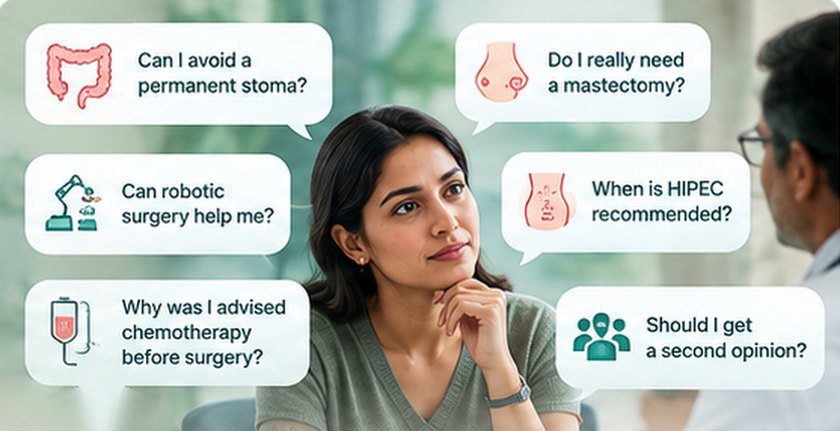
Straight answers to common questions about surgery, stoma, robotic surgery, HIPEC, recurrence, side effects and more.

Concerned about cancer? Talk to a doctor.

Early detection can improve outcomes. If you notice symptoms, are due for screening or have reports you want explained, book a consultation with Dr Ashwin K.R.
About CancerWise: CancerWise is the patient-education resource of Dr Ashwin K.R. Its content is for general information only and does not replace personalised medical advice. Please discuss your own reports, diagnosis and treatment options with your doctor.
This page is for general education only and is not medical advice. Consult a qualified healthcare professional for diagnosis and treatment.