
๐Ÿ“ Whitefield, Bengaluru
HOD & Senior Consultant ยท Surgical Oncology
Consultation by Appointment
Home/Patient Resources/Preparing for Cancer Surgery
CancerWise leaf mark
CancerWise
Prepare

Preparing for cancer surgery: what to expect before, during and after.

Cancer surgery is a procedure in which a surgeon removes a tumour, and often nearby tissue or lymph nodes, to help diagnose, treat, stage or relieve symptoms of cancer. Understanding each stage, from consultation to recovery, may help you feel better prepared โ€” though your own plan may differ, as your oncology team decides what is appropriate for your diagnosis.
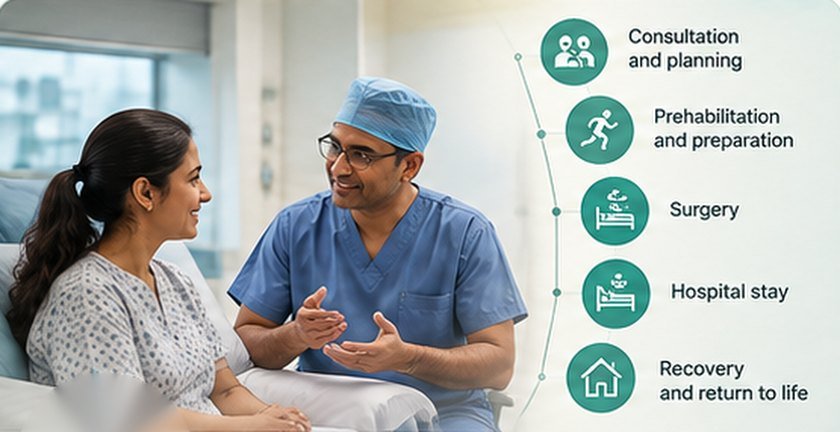
Surgeon talking with a patient before cancer surgery
Your surgical journey

Step by step, from consultation to recovery.

Every patient and every operation is different. This is a general outline; your team will give you advice specific to your surgery.
01

Consultation and planning

Your reports, scans and biopsy are reviewed, and complex cases are discussed at a multidisciplinary tumour board. The operation, its expected benefits, risks and alternatives are explained before you give informed consent.
02

Prehabilitation and preparation

The weeks before surgery matter. Regular walking and breathing exercises, good nutrition with enough protein, stopping smoking and alcohol, and controlling diabetes or blood pressure can all help recovery. Your medicines, including blood thinners, are reviewed; change them only as advised.
03

The day of surgery

You will receive fasting instructions and a reporting time. The anaesthetist meets you before the operation. Operating time varies with the procedure, and your family is updated once it is complete.
04

Your hospital stay

Enhanced recovery (ERAS) principles are used where appropriate: good pain control, getting out of bed early, and restarting fluids and food as soon as it is safe. Drains or catheters are removed when no longer needed. Length of stay depends on the operation.
05

Recovery and return to life

At home you gradually build up activity, look after your wound and eat well. At follow-up, the final pathology report is discussed along with any further treatment. Most people return to daily activities over a few weeks, and longer after major surgery.
06

Follow-up care

Regular follow-up visits, scans or blood tests are planned according to your cancer type and stage, to support recovery and check for any sign of recurrence.

Cancer surgery timeline at a glance

Many cancer surgery journeys follow five stages: consultation, prehabilitation, surgery, hospital stay, and recovery. Timing varies by person and cancer type.
Stage
Main activities
Typical timing
1. Consultation
Review of scans and results, surgical plan, consent
Weeks before surgery
2. Prehabilitation
Exercise, nutrition, breathing and lifestyle preparation
Often 2โ€“6 weeks before surgery, if time allows
3. Surgery
Anaesthesia, tumour removal, immediate monitoring
Surgery day
4. Hospital stay
Pain control, early walking, monitoring, discharge planning
Same day to about 2 weeks, depending on the operation
5. Recovery and lifestyle
Healing at home, follow-up, possible further treatment
Weeks to several months
Consultation

Cancer surgery consultation: what to expect at your first appointment

A cancer surgery consultation is a planning appointment where your surgeon reviews your diagnosis, explains the recommended operation, and discusses your questions before you decide whether to consent to treatment.

What happens during a cancer surgery consultation?

  • Your surgeon reviews your biopsy, pathology report and imaging (CT, MRI, PET or ultrasound).
  • The cancer type, stage and location are explained, along with the goal of surgery: cure, control or symptom relief.
  • Surgical options are compared, which may include open, laparoscopic (keyhole) or robotic-assisted approaches.
  • Risks, benefits, alternatives and expected recovery are discussed as part of informed consent.
  • Your medical history, medications, allergies and previous operations are reviewed.
  • You may meet other team members, such as an anaesthesiologist, nurse navigator or dietitian.

Questions to ask your surgeon before cancer surgery

  1. What is the goal of this operation: cure, control or symptom relief?
  2. How often do you and this hospital perform this operation?
  3. What complications and long-term side effects are possible for me?
  4. Might I need chemotherapy, radiation or other treatment before or after surgery?
  5. How long might I stay in the hospital, and what could recovery look like?
  6. Which medications or supplements should I pause, and when?
  7. How might surgery affect my eating, mobility, fertility, appearance or daily life?
  8. Whom do I contact with concerns before or after the operation?

Pre-operative tests you may be asked to have

Common pre-operative tests are listed below; your team selects those relevant to you.
Test
Purpose
Blood tests
Check blood count, kidney and liver function
Imaging scans
Confirm tumour size and possible spread
ECG or other heart tests
Assess heart health if risk factors are present
Lung function tests
Assess breathing capacity, often before chest or abdominal surgery
Anaesthesia assessment
Plan sedation and pain control

What to bring to your consultation

Use this checklist to make the most of your appointment.
Bring
Why it helps
List of medications, vitamins and supplements
Some may need adjusting before surgery, as advised by your team
Previous records and imaging reports
Gives your surgeon a complete history
A family member or friend
Can help you listen and take notes
Written list of questions
Helps you cover your concerns in the time available
Prehabilitation

Prehabilitation before cancer surgery: getting stronger before your operation

Prehabilitation, or โ€œprehabโ€, is a structured programme of exercise, nutrition and mental preparation before surgery that aims to improve fitness and support recovery.
  • Studies in major surgery suggest that people who are fitter beforehand may have fewer complications and return to activity sooner.
  • Benefits vary by person and procedure, and evidence is still developing for some cancer types.

The main components of prehabilitation

Each part of prehabilitation supports recovery in a different way.
Component
What it may involve
Potential benefit
Physical activity
Daily walking plus light strength exercises
May build stamina and muscle for recovery
Nutrition
Adequate protein and calories, guided by a dietitian
May support wound healing and preserve muscle
Breathing exercises
Deep breathing, incentive spirometer practice
May reduce the risk of chest infections
Stopping smoking and alcohol
Quitting or cutting back as early as possible
May lower wound, heart and lung complications
Emotional support
Counselling, relaxation, support groups
May ease anxiety and support coping
Practical planning
Time off work, transport, help at home
May reduce stress around surgery

How long should you prehabilitate before surgery?

Prehabilitation often begins once surgery is scheduled and may last two to six weeks, if your cancer can safely wait.
  • Your team will advise how much preparation time is realistic for you.
  • Some cancers need prompt surgery; even a few days of better nutrition and gentle movement may help.
  • Check with your surgical team before starting any new exercise or diet plan.

Simple ways to prepare at home

  • Walk daily, building up gradually as your team advises.
  • Include protein at meals, such as eggs, fish, poultry, dairy, beans or tofu.
  • Practise deep breathing several times a day.
  • Prepare freezer meals and set up a comfortable recovery space.
  • Arrange a ride home and someone who can stay with you in the first days.
Surgery day

Cancer surgery day: what happens before, during and after the operation

On the day of cancer surgery, you typically check in, meet the surgical and anaesthesia teams, receive anaesthesia, undergo the procedure, and wake in a recovery area where nurses monitor you.
  • Surgery may take under an hour or many hours, depending on the tumour and the procedure.
  • Follow the specific fasting and medication instructions your team gives you.

Step-by-step: surgery day

This is the typical sequence on the day of your operation.
Step
What happens
1. Fasting
You stop eating and drinking at the time your team specifies
2. Check-in
Identity, consent forms and surgical site are confirmed
3. Anaesthesia
The anaesthesiologist explains your plan and starts an IV
4. Surgery
The tumour and any planned surrounding tissue or lymph nodes are removed
5. Recovery room
Vital signs, pain and alertness are monitored as you wake
6. Transfer
You move to a hospital room, or go home after day surgery

Types of cancer surgery

Cancer operations are grouped by what they aim to achieve.
Type
Purpose
Curative (primary) surgery
Aims to remove the whole tumour and a margin of healthy tissue when cancer is localised
Debulking surgery
Removes as much tumour as is safe when complete removal is not possible
Staging or diagnostic surgery
Obtains tissue or checks lymph nodes to determine the extent of cancer
Palliative surgery
Aims to relieve pain or blockages and improve comfort
Preventive (prophylactic) surgery
Removes tissue at high risk of developing cancer
Reconstructive surgery
Aims to restore appearance or function after tumour removal

Open, laparoscopic and robotic cancer surgery

Suitability of each approach depends on your case.
Approach
Description
General considerations
Open surgery
One larger incision for direct access
Used for many complex or larger tumours
Laparoscopic
Several small incisions and a camera
May mean less pain and a shorter stay for suitable cases
Robotic-assisted
Surgeon controls precise instruments through small incisions
Availability and suitability vary by hospital and cancer type
Your surgeon can explain why a particular approach is recommended for you. Read about robotic cancer surgery โ†’
Hospital stay

Hospital stay after cancer surgery: how long and what to expect

A hospital stay after cancer surgery commonly ranges from a few hours to about two weeks, depending on how extensive the operation is and how you recover.
Many hospitals use Enhanced Recovery After Surgery (ERAS) pathways, combining early eating, early walking and modern pain control.

Typical hospital stay by type of cancer surgery

Approximate stays are shown below; they vary by patient and hospital.
Type of surgery
Typical stay
Lumpectomy (breast-conserving)
Often same day
Mastectomy
Same day to 2 days
Prostatectomy
1โ€“2 days
Lung lobectomy
3โ€“5 days
Colon or rectal resection
3โ€“7 days
Whipple procedure (pancreatic cancer)
7โ€“14 days
Oesophagectomy
7โ€“14 days

What happens in the hospital after surgery

Your care on the ward focuses on comfort, movement and safe recovery.
Area of care
What you may experience
Pain management
Medications, sometimes nerve blocks or an epidural, to help you move and breathe deeply
Early mobilisation
Help to sit, stand and walk within about a day, which may reduce blood clot and pneumonia risk
Tubes and drains
IV lines, catheters or drains may be used and removed as you improve
Eating and drinking
Fluids and food are often restarted early, depending on the operation
Monitoring
Staff check your wound, temperature, breathing and organ function

Common discharge criteria

Your team may check the following before you go home.
Area
Typical goal
Pain
Controlled with oral medication
Eating and drinking
Able to take enough food and fluids
Mobility
Able to walk and manage basic needs safely
Wound
Looks as expected; you understand its care
Follow-up
Appointment and plan for pathology results arranged

What to pack for the hospital

A short checklist helps you arrive prepared.
Category
Items
Documents
Photo ID, insurance details, medication list
Comfort
Loose clothing, non-slip footwear, toiletries
Personal items
Phone, charger, glasses, hearing aids, prescribed devices
Contacts
Family and care-team phone numbers
Recovery

Recovery and lifestyle after cancer surgery: healing, diet, exercise and follow-up

Recovery after cancer surgery is usually gradual and can take several weeks to a few months, with energy, strength and appetite returning in stages.
  • Recovery time depends on the operation, your health beforehand and whether you need further treatment.
  • Fatigue is commonly reported and often eases gradually.

Cancer surgery recovery timeline

These are general milestones; individual recovery varies.
Period
What you may experience
First 1โ€“2 weeks
Rest, pain control, wound care, short walks, fatigue
Weeks 2โ€“6
Growing energy, gradual return to light activities, follow-up visit and pathology results
Weeks 6โ€“12
Return to work and exercise for many people, once cleared by your team
3 months and beyond
Continued strength rebuilding, surveillance visits, adjusting to any lasting changes

Diet, exercise and emotional wellbeing after surgery

Confirm the specifics with your team; these are general tips.
Area
General tips
Nutrition
Small, frequent meals if appetite is low; emphasise protein; stay hydrated; ask about a dietitian referral if you lose weight
Special diets
Some operations need dietary changes; follow your surgeonโ€™s advice on fibre and food types
Exercise
Walk daily and build up gradually; avoid heavy lifting and strenuous exercise until cleared
Rehabilitation
Ask about physiotherapy, especially after breast, chest or abdominal surgery
Emotional health
Anxiety, low mood and fear of recurrence are common and can be treated; support groups and counselling may help

Follow-up care and further treatment

After surgery, your pathology report helps your team decide whether you might need additional treatment such as chemotherapy, radiation therapy, targeted therapy or immunotherapy.
  • Regular follow-up visits and scans monitor your recovery and check for recurrence.
  • Report new symptoms to your team rather than waiting for the next scheduled visit.
After you go home

When to contact your care team or seek emergency care

Follow the specific instructions from your own team. As a general guide, contact your care team promptly for the signs below, and seek emergency care immediately for the last row.
Symptom
Suggested action
Fever or chills
Contact your care team promptly
Redness, swelling, warmth or discharge at the incision
Contact your care team promptly
Pain that is worsening or not controlled by medication
Contact your care team promptly
Persistent vomiting or inability to eat or drink
Contact your care team promptly
Calf pain or swelling, chest pain or shortness of breath
Seek emergency care immediately
FAQs

Frequently asked questions about cancer surgery

Short answers to the questions patients most often ask before an operation.

Recovery commonly takes several weeks to a few months, depending on the operation and your overall health.

  • Minor procedures may need days to weeks.
  • Major operations may need three months or longer.

Preparation typically involves attending pre-operative appointments, following your teamโ€™s fasting and medication instructions, eating well, staying active, and arranging help at home.

  • Stopping smoking and reducing alcohol may lower complication risk.

Cancer operations are usually performed under anaesthesia, so you are not expected to feel pain during the procedure.

  • Afterwards, pain is managed with medications and other techniques.
  • Tell your team if pain is not controlled.

Some people need additional therapy after surgery; this depends on the cancer type, stage and pathology results.

  • Your oncology team will discuss whether this applies to you.
Continue with CancerWise

More clear answers.

Understand
Clear explanations about cancer types, staging, scans, pathology reports and treatment terminology.
Questions
Straight answers to common questions about surgery, stoma, robotic surgery, HIPEC, recurrence, side effects and more.

Planning surgery for a cancer diagnosis?

Book a consultation to discuss your reports, the surgical options and what recovery will look like for you.
About CancerWise: CancerWise is the patient-education resource of Dr Ashwin K.R. Its content is for general information only and does not replace personalised medical advice. Please discuss your own reports, diagnosis and treatment options with your doctor.
This resource provides general educational information and does not replace personalised medical advice from your oncology team. Timeframes are approximate and vary by patient, cancer type and hospital. If you think you are having a medical emergency, contact your local emergency services immediately.