
📍 Whitefield, Bengaluru
HOD & Senior Consultant · Surgical Oncology
Consultation by Appointment
Home/Patient Resources/Questions Patients Really Ask
CancerWise leaf mark
CancerWise
Questions

Questions patients really ask.

Clear, evidence-based answers to common questions about cancer diagnosis, staging, surgery, treatment, recovery, screening, genetics and life after cancer treatment.
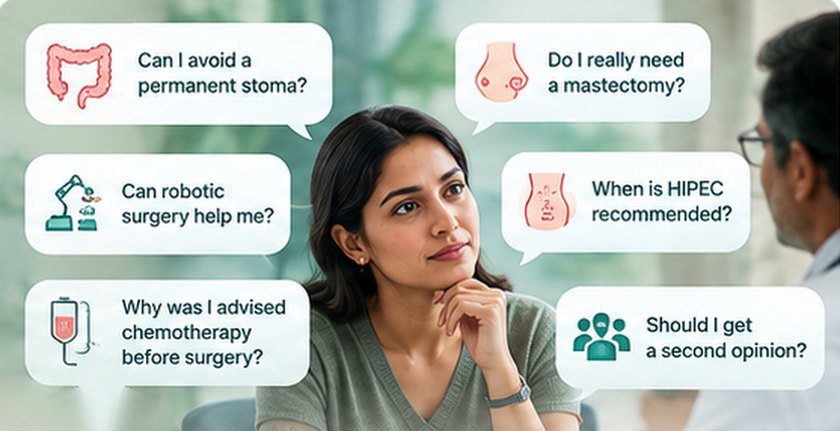
Patient thinking about common cancer surgery questions
Surgery & treatment

Questions about cancer surgery and treatment

Tap a question to read the answer. These are general answers; your own situation may differ, so use them as a starting point for a conversation with your doctor.

Many patients with rectal cancer can now have organ-preserving surgery, where the bowel is rejoined and normal bowel function is kept. Whether this is possible depends on how close the tumour is to the anal sphincter, how it responds to treatment before surgery, and your pelvic anatomy. Sometimes a temporary stoma is made to protect the join while it heals; this is usually reversed after a few months. Read about organ preservation surgery →

Not always. Many women with early breast cancer are suitable for breast-conserving surgery followed by radiotherapy, which gives outcomes comparable to mastectomy in suitable patients. Oncoplastic techniques can remove larger tumours while preserving the shape of the breast. Tumour size, location, the number of tumours and genetic factors all guide the choice. Read about oncoplastic breast surgery →

Robotic surgery uses small incisions and magnified 3D vision, which can mean less blood loss, less pain and a quicker return to normal activity for suitable patients. The cancer operation itself follows the same principles as open surgery. Not every cancer or every patient is suitable; this is assessed individually. Read about robotic cancer surgery →

Treatment before surgery (neoadjuvant therapy) can shrink the tumour, make the operation safer or less extensive, treat microscopic spread early, and show how the cancer responds to treatment. It is standard for several cancers, including many stomach, oesophageal, rectal and some breast cancers.

HIPEC (heated chemotherapy washed through the abdomen during surgery) is combined with cytoreductive surgery for selected patients whose cancer has spread only to the lining of the abdomen (peritoneum), for example from ovarian, colorectal or appendiceal cancer, or pseudomyxoma peritonei. Careful selection is essential. PIPAC is a separate keyhole option for some patients who are not suitable for major surgery. Read about HIPEC & PIPAC →

A second opinion is reasonable, especially for complex or rare cancers or when major surgery is proposed. Good doctors expect and welcome it. Bring all your reports, scan images and pathology slides or blocks if requested, so the review is complete. Request a second opinion →

The risk of recurrence depends on the cancer type and stage, the grade, surgical margins, lymph node involvement and the tumour’s biology. Your follow-up plan of visits, scans and blood tests is designed around this risk. Tell your team about any new or persistent symptoms between visits.

Tiredness, some pain and changes in appetite or bowel habit are common in the first weeks, depending on the operation. Most improve steadily. Your team will explain the specific effects of your surgery and how they are managed, and when to call them.

It varies with the operation and your general health. After minimally invasive surgery many people resume light daily activities within a few weeks; after major open or multivisceral surgery recovery takes longer. Heavy lifting is usually avoided for several weeks. Your surgeon will give you a personal timeline.

Diet & nutrition

Cancer Diet & Nutrition

A balanced cancer diet with adequate protein, whole grains, fruit, vegetables and healthy fats supports strength, immunity and treatment tolerance — there is no single “cancer-fighting food.”

Prioritise:

  • Protein at every meal
  • Colourful vegetables and fruit
  • Whole grains and adequate fluids
  • Small, frequent meals if appetite is low

An oncology dietitian can build a personalised cancer diet plan around your specific treatment and side effects.

All cells in the body, including healthy ones, use glucose for energy — there is no scientific evidence that eating sugar feeds cancer or accelerates tumour growth.

  • This is one of the most searched cancer nutrition myths.
  • Cutting out sugar entirely does not starve a tumour or slow cancer growth.
  • That said, limiting added sugar and refined carbohydrates is part of generally healthy eating and helps manage weight and blood sugar levels during cancer treatment.

No single diet has been scientifically proven to cure or fight cancer on its own.

  • Diets marketed as “cancer-fighting” (alkaline, all-raw, extreme restriction) lack strong clinical evidence and can cause harmful weight loss during treatment.
  • A balanced, adequately caloric diet that supports your body through surgery and treatment is the evidence-based approach — discuss any specific plan with your oncology team first.

No — complete sugar avoidance is not medically necessary or supported by evidence.

  • Extremely restrictive diets can lead to unintended weight loss and nutrient deficiencies, which can worsen treatment tolerance.
  • Moderate sugar intake within a balanced diet is generally fine; the focus should be overall nutrition quality, not eliminating a single nutrient.

No — no diet has been shown to cure or shrink cancer on its own.

  • Nutrition plays an important supportive role, helping the body tolerate surgery, chemotherapy and radiation and aiding recovery, but it works alongside, not instead of, medical treatment.
  • Be cautious of any programme claiming diet alone can replace standard cancer therapy.

Certain foods carry a higher infection or symptom risk during chemotherapy and are generally best limited.

  • Raw or undercooked meat, fish and eggs
  • Unpasteurised dairy and juices
  • Unwashed raw produce
  • Excess caffeine or alcohol if worsening nausea or interacting with medication

Your oncology team can tailor this to your blood counts and treatment phase.

Small, frequent, calorie- and protein-dense meals are usually easier to manage than three large meals when appetite is low.

  • Nutrient-dense smoothies and shakes
  • Soft, mild-flavoured foods if nausea is present
  • Nut butters, dairy or protein supplements between meals

Unintentional weight loss during treatment should always be reported to your care team promptly.

Cancer patients generally need more protein than usual — often 1 to 1.5 grams per kilogram of body weight daily — to support tissue repair and recovery.

  • Exact needs vary by treatment type, surgery, and wound-healing demands.
  • A dietitian can calculate a personalised target and suggest practical ways to reach it if appetite is reduced.

In the days before surgery, a protein- and nutrient-rich diet helps your body tolerate the procedure and heal faster afterward.

  • Adequate protein (lean meat, fish, eggs, dairy, legumes)
  • Iron- and vitamin-rich foods to support healing
  • Good hydration
  • Avoiding alcohol; following fasting instructions before anaesthesia

Diet after surgery is typically reintroduced gradually — clear liquids first, then soft foods, before returning to a normal diet.

  • The exact progression depends on which organs were involved; abdominal or gastro intestinal surgery usually requires a slower, staged reintroduction.
  • Protein and adequate calories remain important for wound healing throughout.
  • Your surgical team will provide a specific post-operative diet plan.

Not automatically — some vitamins and supplements can interfere with chemotherapy or radiation, so none should be started without checking with your oncologist first.

  • High-dose antioxidants are a particular concern during radiation and some chemotherapy regimens, as they may reduce treatment effectiveness.
  • Always share your full supplement list with your care team.

No — turmeric and other herbal remedies have not been shown to cure or prevent cancer in humans.

  • Compounds like curcumin show anti-cancer activity in lab studies, but this hasn’t translated into proven clinical benefit, and high doses can interact with chemotherapy drugs or blood thinners.
  • Discuss any herbal supplement with your oncologist first.

Ketogenic diets are not a standard or proven cancer treatment, though they are being studied for specific situations under medical supervision.

  • For most patients, especially those already at risk of weight loss during treatment, a very low-carbohydrate diet can be hard to sustain and may not provide enough energy.
  • Discuss any major diet change with your oncology team before starting.
Myths & facts

Cancer Myths & Facts

No — cancer does not spread from person to person through contact, air, or bodily fluids the way an infection does.

  • Cancer results from changes within a person’s own cells, not a transmissible pathogen.
  • The exception: certain viruses linked to some cancers (HPV with cervical cancer, Hepatitis B/C with liver cancer) can spread between people — it is the virus that spreads, not the cancer itself.

No — there is no strong scientific evidence that psychological stress directly causes cancer.

  • Large studies have not established a direct causal link between stress and cancer risk or cancer development.
  • Chronic stress can affect sleep, immune function and health behaviours that indirectly influence overall health, but managing stress is valuable for wellbeing rather than cancer prevention specifically.

No — cancer is not always fatal, and survival rates vary enormously by cancer type, stage and how early it’s caught.

  • Many cancers, especially when detected early, have high cure or long-term survival rates with modern treatment.
  • Even advanced cancers can often be controlled for extended periods.
  • Survival statistics are population averages; your specific prognosis depends on your individual case.

No — current surgical evidence does not support the idea that properly performed cancer surgery causes cancer to spread faster.

  • Surgical oncologists follow specific oncological principles, including minimising tumour handling and removing tissue with clear margins, designed to prevent tumour cell dissemination.
  • Surgery remains one of the most effective cancer treatments for many solid tumours; delaying it out of this fear can allow the cancer to progress further.

No — current medical evidence does not support the idea that a properly performed biopsy causes cancer to spread.

  • This is a persistent but unfounded fear.
  • Biopsy techniques are specifically designed to minimise any risk of seeding cancer cells along the needle or incision path, and where any risk exists it is extremely low.
  • Avoiding a needed biopsy delays diagnosis and treatment, which is far riskier.

No — chemotherapy is not automatically required after every cancer surgery.

  • Whether additional (adjuvant) chemotherapy is needed depends on cancer type, stage, grade and residual recurrence risk after surgical removal.
  • Some early-stage cancers are treated with surgery alone; your team assesses pathology results using established risk criteria.

No — no alternative cancer treatment or herbal remedy has been proven to cure cancer as a replacement for standard medical treatment.

  • Studies consistently show patients who delay or refuse conventional cancer treatment for unproven alternatives have significantly worse outcomes.
  • Complementary approaches can help manage symptoms alongside standard treatment but should not replace surgery, chemotherapy or radiation recommended by your oncologist.

No — Stage IV cancer is advanced, but effective treatment options are almost always still available.

  • Stage IV means the cancer has spread beyond its original site, which typically shifts the goal toward controlling disease and managing symptoms.
  • Some Stage IV cancers with limited spread can still be treated aggressively with surgery or targeted therapy — discuss options with a multidisciplinary team.

No — a family history of cancer increases your risk but does not guarantee you will develop it.

  • Only about 5–10% of cancers are caused by a directly inherited genetic mutation; most arise from age, environment and random cellular changes.
  • Even with an inherited mutation, risk is elevated, not certain — genetic counselling and enhanced screening can help manage it proactively.

No — hair loss depends on the specific cancer treatment used, not on having cancer itself.

  • Hair loss is a side effect of certain chemotherapy drugs and some head radiation, not of cancer or surgery alone.
  • Many patients on surgery-only treatment, targeted therapy, or certain chemotherapy regimens keep their hair.
  • Ask your oncologist whether your specific plan is likely to cause it.

No — many cancers, especially in early stages, cause no pain at all.

  • This is why routine cancer screening matters: early-stage cancers are often symptom-free and found through mammograms, colonoscopies or other tests rather than pain.
  • Pain tends to appear as a tumour grows large enough to press on nearby structures, or in more advanced disease.

Spontaneous regression of cancer without treatment is extremely rare and should not be relied upon as a treatment strategy.

  • Isolated documented cases exist in medical literature, but they are exceptionally uncommon and unpredictable.
  • The overwhelming majority of cancers require active treatment to be controlled or cured; delaying treatment to see if it resolves on its own is medically inadvisable.

No — major health bodies have found no consistent evidence that mobile phones or microwave ovens cause cancer.

  • Both emit non-ionising radiation, energy too low to damage DNA directly, unlike ionising radiation (X-rays, gamma rays), which is a known risk factor.
  • Large studies tracking mobile phone use over decades have not shown a consistent increase in brain or other cancers.
Screening

Cancer Screening & Early Detection

General

Cancer screening means testing for cancer in people without symptoms, aiming for early cancer detection at a more treatable stage.

  • Early-stage cancers generally have significantly higher cure rates and require less invasive treatment than cancers found later.
  • Routine cancer screening for cancers like breast, colorectal and cervical cancer has been shown to reduce deaths from those diseases at a population level.

Recommended starting ages vary by cancer type and personal risk factors.

  • Breast cancer: around age 40–45
  • Colorectal cancer: around age 45–50
  • Cervical cancer: around age 21–25

Those with a strong family history or known genetic risk are typically advised to start earlier — discuss a personalised schedule with your doctor.

Established, evidence-based screening programmes exist mainly for breast, cervical, colorectal, and lung cancer (in high-risk smokers).

  • Other cancers, such as ovarian and pancreatic cancer, currently lack a reliable population-wide screening test, which is part of why they’re often diagnosed later.
  • Research into new screening methods for these cancers is ongoing.

Some blood tests support cancer detection, but no single blood test reliably screens for all cancers at an early stage.

  • Tumour marker blood tests are more useful for monitoring known cancers than screening healthy people, since they can be falsely elevated or normal in early disease.
  • Newer multi-cancer blood tests are being studied but are not yet standard screening tools.

Routine whole-body scans are generally not recommended for cancer screening in average-risk, symptom-free adults.

  • These scans frequently detect incidental findings that require further, sometimes invasive testing but turn out to be harmless, causing unnecessary anxiety, cost and radiation exposure.
  • Targeted screening based on established guidelines is more effective than broad imaging.

Breast Cancer

Most guidelines recommend a mammogram every one to two years for average-risk women starting around age 40–45.

  • Women at higher risk, due to family history, genetic mutations or prior chest radiation, may need to start earlier and be screened annually, sometimes combined with breast MRI.
  • Confirm the right interval for your risk category with your doctor.

Any new breast lump should be evaluated by a doctor promptly, even if it seems small or painless.

  • Note its size, location and whether it changes with your menstrual cycle
  • Schedule a clinical exam
  • Expect possible imaging and biopsy if needed

Most breast lumps turn out to be benign, but only proper evaluation can confirm this.

Average-risk women are generally advised to start regular mammography around age 40 to 45.

Women with a first-degree relative diagnosed with breast cancer, especially young, or a known BRCA mutation, are usually advised to start screening 10 years earlier than their relative’s age at diagnosis, or as early as 25–30 in high-risk cases.

Colorectal Cancer

Early colorectal cancer often causes subtle or no symptoms, which is why screening matters even without warning signs.

  • Persistent change in bowel habits
  • Blood in the stool
  • Unexplained weight loss
  • Persistent abdominal pain or fatigue

Symptoms lasting more than two to three weeks should be evaluated promptly.

A colonoscopy examines the entire colon using a flexible camera, allowing doctors to detect and often remove precancerous polyps before they become colon cancer.

  • For average-risk individuals, a screening colonoscopy is typically recommended every 10 years starting at age 45, assuming normal findings.
  • Those with polyps found, a family history, or other colorectal cancer risk factors usually need more frequent screening.

Average-risk adults are now generally advised to begin colorectal cancer screening at age 45.

  • This starting age has been lowered in recent years due to rising colorectal cancer rates in younger adults.
  • Those with a family history of colorectal cancer or polyps, or certain genetic syndromes, should start earlier.

Cervical & Other Cancers

A Pap smear checks cervical cells for precancerous changes and is typically recommended every three years starting around age 21–25.

  • When combined with HPV testing (co-testing), the interval can often be extended to every five years for women over 30.
  • Check current recommendations with your gynecologist based on your risk factors.

Lung cancer screening with low-dose CT is generally recommended for current or former heavy smokers within a specific age range, typically 50–80.

  • Eligibility usually requires a significant smoking history (commonly 20+ pack-years) and, for former smokers, quitting within the last 15 years.
  • It is not currently recommended for the general non-smoking population.

There is no standard screening test for pancreatic cancer in the general population.

  • Because pancreatic cancer is relatively uncommon and often produces few early symptoms, population-wide screening hasn’t been shown to reduce deaths.
  • People with a strong family history or known genetic mutations linked to it may be offered specialized surveillance imaging.
Recurrence

Recurrence of Cancer

Warning signs of recurrence vary by cancer type but commonly include new or returning symptoms similar to the original diagnosis.

  • New lumps, swelling or pain near the original site
  • Unexplained weight loss or fatigue
  • Persistent cough, changes in bowel/bladder habits, or abnormal bleeding

Report any new or unusual symptom to your oncology team rather than waiting for your next scheduled visit.

Recurrence is confirmed through imaging, blood tests or biopsy — not through symptoms alone.

  • Some recurrences cause noticeable symptoms, while others are found only through routine follow-up scans or tumour marker tests before symptoms appear.
  • Contact your care team promptly if you notice anything concerning between scheduled visits.

Recurrence risk depends heavily on your specific cancer type, stage, treatment received and individual biology — there is no single universal number.

Your oncologist can give a personalised estimate based on your pathology report, staging and treatment response, often expressed as a percentage risk over five or ten years.

New, persistent or worsening pain, especially near the original tumour site, should always be evaluated rather than assumed unrelated.

  • Post-treatment pain is common and often unrelated to recurrence (from scar tissue, nerve changes, or normal healing), but only your care team can distinguish this through examination or imaging.
  • Don’t hesitate to report new pain, even if unsure.

Follow-up testing typically combines physical examination, imaging and blood-based tumour markers, chosen based on your specific cancer type.

  • CT, MRI or PET scans
  • Tumour marker blood tests (cancer-specific)
  • Endoscopy or colonoscopy for certain GI cancers
  • Physical and clinical examination

The specific combination and frequency are outlined in your personalised follow-up plan.

Scan frequency typically starts more often in the first two to three years after treatment and gradually decreases over time.

  • A common pattern is every 3–6 months initially, shifting to annually after around year 3–5, though this varies by cancer type and initial risk level.
  • Your oncology team will provide a tailored surveillance schedule.

Yes — some cancers can recur even after 5 or 10 years, though this becomes progressively less common the longer you remain disease-free.

  • Certain cancer types, such as some hormone-receptor-positive breast cancers, carry a known risk of later recurrence beyond five years.
  • Others carry most of their recurrence risk in the first two to three years.

Recurrence likelihood depends more on stage, grade and treatment response than on cancer type alone, though some cancers are inherently more prone to it.

  • Cancers like ovarian, pancreatic, and certain aggressive breast or lung cancer subtypes tend to have higher recurrence rates, particularly at advanced stages.
  • Early-stage, fully resected cancers with clear margins generally carry lower risk regardless of type.

Not necessarily — treatability depends on where and how the cancer recurs, not simply on the fact that it has returned.

  • A local recurrence caught early may still be treated with curative intent through surgery or targeted therapy.
  • Recurrence that has spread more widely typically shifts treatment goals toward long-term control rather than cure, though many effective options remain available.

Treatment for recurrent cancer depends on the location, extent and previous treatments received, and may include surgery, chemotherapy, radiation, targeted therapy or immunotherapy.

Your team will reassess the cancer’s characteristics, as they may have changed since the original diagnosis, and may recommend genetic or molecular testing to guide targeted treatment choices.

Yes — maintaining a healthy weight, staying physically active, eating a balanced diet, and avoiding tobacco and excess alcohol are associated with lower recurrence risk for several cancer types.

  • These changes support overall health and treatment tolerance, though they don’t guarantee prevention.
  • They work best alongside, not instead of, your prescribed medical follow-up.

Most recurrences, when they occur, happen within the first two to three years after treatment ends, though timing varies by cancer type.

  • This is why follow-up visits and scans are typically most frequent during this early period.
  • Some cancers have a longer “tail” of risk extending beyond five years, factored into your long-term surveillance schedule.

Symptoms of spread (metastasis) depend on where the cancer travels, commonly bone, liver, lungs, or brain.

  • Bone: new or worsening bone pain
  • Liver: abdominal swelling, jaundice
  • Lungs: persistent cough, shortness of breath
  • Brain: headaches, vision changes, confusion

Any new, persistent symptom should be discussed promptly with your oncology team.

Fear of recurrence is extremely common among cancer survivors and is a recognised part of survivorship, not a sign of a mental health problem.

  • Structured follow-up care, open communication with your care team about symptoms, and support groups or counselling for survivors can help manage this anxiety.
  • A clear surveillance plan reduces uncertainty over time.
Life after treatment

Life After Cancer Treatment

Persistent fatigue after treatment ends, known as cancer-related fatigue, is one of the most common survivorship complaints and can last months to over a year in some patients.

  • It results from a combination of treatment effects, disrupted sleep, reduced activity during treatment, and the body’s ongoing recovery.
  • Gentle, gradually increasing physical activity and ruling out other causes of post-chemo fatigue, like anemia, with your doctor can help.

Follow-up care typically includes scheduled physical exams, imaging and blood tests at set intervals to monitor for recurrence and manage lingering side effects.

  • The schedule is usually more frequent in the first few years (often every 3–6 months) and tapers to annual visits over time.
  • Your survivorship plan outlines what to expect and when.

Energy levels typically improve gradually over several months to a year after treatment ends, though timing varies widely between individuals.

  • Treatment intensity, age and overall health affect recovery speed.
  • If fatigue is severe, worsening, or not improving over time, mention it to your care team, as other treatable contributing causes are worth ruling out.

Most side effects of chemotherapy and radiation improve after treatment ends, though some can persist long-term or appear later.

  • Common short-term effects like nausea and hair loss usually resolve within months.
  • Effects such as neuropathy, fertility changes, or organ-specific radiation effects can be longer-lasting or permanent depending on the regimen.
  • Ask your oncologist which effects to expect.

A survivorship care plan is a personalised document summarizing your treatment history, follow-up schedule and recommendations for managing long-term effects.

  • Summary of diagnosis and treatments received
  • Follow-up test and visit schedule
  • Signs of recurrence to watch for
  • Lifestyle and screening recommendations

It helps you and any future healthcare providers coordinate your ongoing care.

Visit frequency typically starts at every 3 to 6 months in the first few years and gradually decreases to annually over time.

  • The exact schedule depends on cancer type, stage and individual recurrence risk, outlined in your survivorship plan.
  • Attending visits even when feeling well matters, since many recurrences are found before symptoms appear.

Late effects can emerge months or years after treatment and vary by the specific therapies received.

  • Heart or lung changes from certain chemotherapy drugs or chest radiation
  • Nerve damage (neuropathy)
  • Hormonal or fertility changes
  • Cognitive changes (“chemo brain”)

Your survivorship plan should flag which late effects are relevant to your specific treatment.

“Chemo brain” symptoms — mild memory and concentration difficulties after cancer treatment — are a real, recognised phenomenon that usually improves over time.

  • Use planners, reminders and lists
  • Get adequate sleep and manage stress
  • Stay mentally and physically active
  • Break tasks into smaller steps

If symptoms are severe or worsening, mention this to your doctor to rule out other causes.

Timing varies widely and depends on your job’s physical demands, your recovery pace, and any lingering side effects like fatigue.

  • Some people return within weeks of finishing treatment; others need several months, particularly after major surgery or intensive chemotherapy/radiation.
  • A phased, part-time return is often easier than resuming full duties immediately.

Yes — moderate exercise is generally safe and actively encouraged after cancer treatment, once cleared by your care team.

  • Regular activity is associated with reduced fatigue, improved mood and better long-term outcomes for several cancer types.
  • Start gradually, especially after major surgery, and ask your doctor for any activity-specific precautions.

Ongoing worry about recurrence, known as fear of recurrence, is extremely common among survivors and generally eases with time and support.

Sticking to your scheduled follow-up plan, discussing new symptoms directly with your care team rather than assuming the worst, and connecting with survivor support groups or a counsellor can meaningfully reduce this anxiety.

Fertility after chemotherapy depends on the specific drugs used, dosage and your age at treatment — some patients retain fertility, others experience temporary or permanent changes.

  • Fertility preservation options, like egg, sperm or embryo freezing, are ideally discussed before treatment begins.
  • If treatment is already complete, a fertility specialist can assess your current reproductive status and options.

Feeling low or even depressed after finishing treatment is a recognised experience, sometimes surprising patients who expected relief instead.

  • The end of frequent medical contact can feel destabilizing, and processing the emotional impact of diagnosis often happens once the urgency of active treatment passes.
  • Persistent or interfering feelings warrant speaking with a counsellor.

Many hospitals and cancer centres offer survivor support groups, often organised by cancer type, which your care team or social worker can help connect you with.

  • Online communities and national cancer organizations also host support groups and forums for specific cancer types.
  • Ask your oncology team’s nursing or counselling staff for local recommendations.
Genetics

Genetics, Family History & Hereditary Cancer

Most cancers are not directly inherited — only about 5 to 10% result from an inherited gene mutation, with the rest arising from age, environment and random cellular changes.

A strong family history — multiple relatives affected, diagnoses at young ages, or certain cancer combinations — can indicate an inherited pattern worth investigating through genetic counselling.

Not necessarily — having a parent with cancer raises your risk somewhat but does not mean you will develop cancer yourself.

  • Your specific risk depends on the cancer type, your parent’s age at diagnosis, and whether other relatives are affected.
  • Discussing family history with a doctor or genetic counsellor can help determine if earlier screening is appropriate.

It may be worth considering, particularly if a relative was diagnosed young, multiple relatives share the same or related cancer, or a known hereditary syndrome runs in the family.

A genetic counsellor can assess your specific family history first, since testing without a clear indication can produce results that are difficult to interpret.

A positive BRCA1 or BRCA2 gene test means you carry an inherited breast cancer gene mutation that significantly raises lifetime risk of breast and ovarian cancer, and in men, prostate and breast cancer.

  • It does not mean cancer is certain.
  • A positive BRCA test means enhanced screening, and in some cases preventive options, should be discussed with a genetic specialist to manage this elevated hereditary cancer risk proactively.

BRCA testing is generally considered for people with a personal or family history suggestive of hereditary breast/ovarian cancer syndrome.

  • Breast cancer diagnosed under age 45–50
  • Ovarian cancer at any age
  • Multiple relatives with breast or ovarian cancer
  • Known BRCA mutation in the family
  • Certain higher-risk ethnic backgrounds (e.g. Ashkenazi Jewish)

A genetic counsellor can assess eligibility.

No — a positive genetic test means increased risk, not certainty.

  • Many carriers of hereditary cancer gene mutations never develop cancer, particularly with proactive management.
  • Enhanced screening, risk-reducing medication, or preventive surgery in some cases can meaningfully lower risk.
  • It’s a tool for informed monitoring, not a diagnosis.

Lynch syndrome is an inherited condition caused by mutations in DNA mismatch repair genes that significantly raises the risk of colorectal, endometrial and several other cancers.

People with Lynch syndrome typically need to start colorectal cancer screening earlier and more frequently, often beginning in their 20s or 30s, along with monitoring for other associated cancers.

Multiple affected family members, especially with the same or related cancer types or diagnoses at young ages, can suggest a hereditary cancer syndrome worth investigating.

  • Genetic counselling can help map your family history systematically and determine whether testing is appropriate.
  • Even without an identified gene, a strong family history alone may justify earlier or more intensive screening.

A hereditary cancer syndrome is an inherited genetic condition that significantly increases the lifetime risk of developing one or more specific types of cancer.

  • Examples include hereditary breast and ovarian cancer syndrome (BRCA1/2), Lynch syndrome, and familial adenomatous polyposis.
  • These typically warrant earlier, more frequent screening and specialist follow-up for carriers.

Testing children is generally considered case by case, often delayed until adulthood unless the associated cancer risk begins in childhood.

Since most hereditary cancer syndromes primarily raise adult cancer risk, genetic counsellors typically recommend waiting until the child is old enough to understand and participate in the decision, usually 18 or older.

Genetic counselling is a consultation with a specialist trained to assess your cancer risk, explain what testing can and cannot tell you, and interpret results in context.

It’s generally recommended before testing, as it helps determine which test is appropriate and prepares you for uncertain findings (variants of unknown significance), which are common and require careful interpretation.

Preventive options for hereditary high-risk individuals range from enhanced screening to risk-reducing medication or surgery, depending on the specific syndrome and cancer type.

  • More frequent or earlier imaging/screening
  • Risk-reducing medications for certain breast cancer risk
  • Preventive (prophylactic) surgery, such as mastectomy or oophorectomy in select BRCA carriers

These decisions are highly individual and made together with a specialist team.

This varies by country and by insurance type, so it’s worth checking local regulations and policies before testing.

  • Some regions have specific legal protections against genetic discrimination in health insurance, though life and disability insurance may be treated differently.
  • A genetic counsellor can typically advise on relevant local protections.

Yes — carrying a hereditary cancer gene mutation significantly raises risk, but it does not guarantee that cancer will develop.

  • Many carriers remain cancer-free throughout life, particularly with proactive screening and, where appropriate, preventive measures.
  • Risk estimates reflect probability, not certainty, for any individual carrier.
Cost & logistics

Cost, Insurance & Logistics

Cost varies by cancer type, procedure complexity, length of hospital stay, and robotic vs. open technique.

ICU stay, complications, or combined procedures (e.g. HIPEC) add cost. Request a personalised estimate once your treatment plan is finalised.

Many Indian insurers cover it, but terms vary by policy and provider.

Confirm coverage directly with your insurer and request pre-authorisation before admission.

Bring prior scans, biopsy/pathology reports, treatment summaries, your current medication list, and any specialist referral letters.

The checklist below explains why each one helps.

Documents checklist for your first consultation

Document
Why it’s needed
Prior scans (film or CD/digital)
Lets the surgeon assess extent of disease without repeating imaging
Biopsy & pathology reports
Confirms diagnosis, tumour type and grade
Prior treatment/discharge summaries
Shows what’s already been done, avoiding duplicate treatment
Current medication list
Flags interactions relevant to surgery or anaesthesia
Specialist referral letters
Gives context from other doctors already involved in your care
Emotional support

Emotional & Family Support

Yes — a wide range of emotional responses, including sadness, anxiety, anger and shock, is a normal and common reaction to a cancer diagnosis.

  • These feelings often fluctuate throughout treatment.
  • If they persist, worsen, or interfere significantly with daily functioning or sleep, speaking with a counsellor or psycho-oncology specialist is recommended and can meaningfully help.

Practical help, such as attending appointments, organising information and managing daily tasks, is often as valuable to a patient as emotional support.

  • Listen without rushing to “fix” everything
  • Offer specific help (rides, meals, errands) rather than a general “let me know”
  • Respect the patient’s pace and privacy around what they want to discuss

Small, consistent gestures often matter more than grand ones.

Fear of recurrence is a normal, well-recognised part of survivorship and tends to ease over time with the right support.

Sticking closely to your scheduled follow-up plan, promptly discussing new symptoms with your care team rather than assuming the worst, and joining survivor support groups or working with a counsellor can all help manage this anxiety.


Didn't find your question?

Send it to Dr Ashwin K.R.’s team and they will point you to the right resource or suggest a consultation.
Continue with CancerWise

More clear answers.

Understand
Clear explanations about cancer types, staging, scans, pathology reports and treatment terminology.
Prepare
What to expect before, during and after surgery, including prehabilitation, hospital stay, recovery and lifestyle.

Want answers specific to your case?

Book a consultation or request a second opinion with Dr Ashwin K.R.
About CancerWise: CancerWise is the patient-education resource of Dr Ashwin K.R. Its content is for general information only and does not replace personalised medical advice. Please discuss your own reports, diagnosis and treatment options with your doctor.
This FAQ resource provides general educational information and does not replace personalised medical advice from your oncology team.